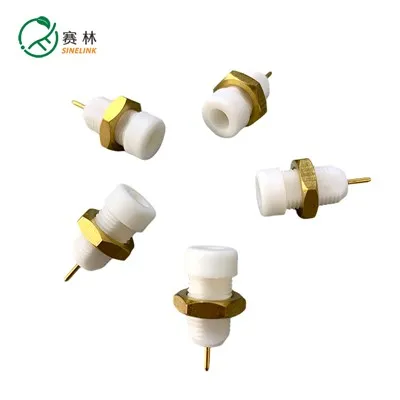


We, Shenzhen Sinelink Electronics co., limited, are a professional provider of a comprehensive range of medical accessories and solutions for customers tailored to meet their specific needs, we have the capability and flexibility of manufacturing in both high and low volumes, we delivery qualified products with more cost-effective.
Sinelink is your one-stop-shop for all patient monitor accessories, we are specialized and experts in this field which has allowed us to supply qualify products, all our products are designed and manufactured to the specifications of the original equipment manufacturer's products, characteristics are meeting or exceeding the original manufacturer's warranty.

Why Choose Us
01
Technical Support
We have a professional technical support team, ready to answer your technical questions during product use. No matter what difficulties you encounter, just contact us and we will be happy to provide you with a solution.
02
Product Quality Assurance
We promise that all the products we sell will undergo strict quality testing to ensure that the products you purchase meet international standards and your expectations. If quality problems occur under normal use, we will provide corresponding solutions based on the specific situation.
03
Logistics Tracking
In order to ensure that you can receive the goods in time, we will provide you with full logistics tracking services. You can check the transportation status of the goods at any time through the tracking number provided by us.
04
After-Sales Service Consultation
If you have any questions or suggestions during the cooperation process, please feel free to contact us. We will respond promptly and provide you with satisfactory answers and solutions.

The Sinelink EEG electrodes are featured low impedance with stable signal transmission.With a cast design and precision craftsmanship, Sinelink EEG electrodes is optimized for longtime of use.

The Disposable Monopolar Ear Clip Electrode produced by Sinelink is made of medical-grade PVC material and stainless steel electrodes.

Ear-clip EEG electrodes are a type of EEG electrode designed to be attached to the earlobe, Using TPU soft and tough wire, the signal is clear and stable, safe DIN42 802 anti-touch connector, low offset voltage, low noise, high stability.

Ear-clip EEG electrodes are a type of EEG electrode designed to be attached to the earlobe, Using TPU soft and tough wire, the signal is clear and stable, safe DIN42 802 anti-touch connector, low offset voltage, low noise, high stability.

Silver/Silver Chloride Cup Electrodes
The Sinelink disposable EEG electrodes are featured low impedance with stable signal transmission.

A connector known as a stacking lead (also known as a "linker," "stacking electrode," "Stacking Electrode Jumper," or "jumper") is used to bridge two electrode inputs together in order to reduce the number of electrodes, block non-EEG signals, or combine different inputs together.

Disposable AgCl ABS EEG Deep Cup Electrode Wire
Economical disposable 10mm EEG cup electrodes produced by Sinelink
Disposable, effectively avoiding cross infection
12 colors/bag, supporting multiple lengths 1.0m/1.5m/2.0m/2.5, etc.

Reusable Pure Solid Silver EEG Electrode Cups For Kids
Pure silver 6mm EEG cups
Made of die-cast pure (99.9%+) silver
Set of 10 with 10 different wire colors.

Reusable Cast Pure Silver 10mm EEG Cups Electrode
Pure silver 10mm EEG cups
Made of die-cast pure (99.9%+) silver
Set of 12 with 12 different wire colors.
What is Brain Electrode Touch Dry for EEG?
An EEG is a test that detects abnormalities in your brain waves, or in the electrical activity of your brain. During an EEG, electrodes are pasted onto your scalp. These are small metal disks with thin wires. They detect tiny electrical charges that result from the activity of your brain cells. The charges are amplified and appear as a graph on a computer screen.
The test uses small, metal discs called electrodes that attach to the scalp. Brain cells communicate via electrical impulses, and this activity shows up as wavy lines on an EEG recording. Brain cells are active all the time, even during sleep.
Benefits of Brain Electrode Touch Dry for EEG
Expanding Care Beyond the Clinic
In-home EEG monitoring service is a game-changer, not just for pediatric patients but for adults who experience the burden of neurological disorders. The service is especially pivotal for detecting signs of epilepsy in children and adults, where the comfort of familiar surroundings can result in more natural and telling EEG results.
Continuous EEG Monitoring: The In-Home Advantage
While continuous EEG monitoring is a staple in hospitals for seizure analysis, the innovative approach of monitoring EEG at home extends care to those who may face travel limitations or heightened stress in clinical settings. This is a profound step forward for individuals who require long-term EEG monitoring due to chronic conditions.
Bridging the Gap with Neurotech EEG
For clinics and healthcare providers, the ability to offer at-home EEG services represents a significant enhancement to patient care. It aligns with the growing trend towards patient-centered healthcare, where services are tailored to the individual needs of each patient, whether child or adult.
A Call to Embrace Neurodiagnostic Evolution
Embracing at-home EEG services is not just about keeping pace with technology; it's about redefining the patient experience. It's about granting dignity and control to those who are navigating the challenges of epilepsy and other neurological conditions.
Type of Brain Electrode Touch Dry for EEG
Routine EEG
During the test, you'll be asked to rest quietly. You will usually be asked to open or close your eyes from time to time. In most cases, you'll also be asked to breathe in and out deeply (called hyperventilation) for a few minutes.
Sleep EEG or sleep-deprived EEG
A sleep EEG is carried out while you're asleep. It may be used if a routine EEG does not give enough information, or to test for sleep disorders.
Ambulatory EEG
An ambulatory EEG is where brain activity is recorded throughout the day and night over a period of one or more days. The electrodes will be attached to a small portable EEG recorder that can be clipped onto your clothing.
Video telemetry
Video telemetry, also called video EEG, is a special type of EEG where you're filmed while an EEG recording is taken. This can help provide more information about your brain activity.
Invasive EEG-telemetry
This EEG is not common, but it may be used to check if surgery is possible for some people with more complex epilepsy.
It involves surgery to place electrodes directly on the brain to find out exactly where the seizures are coming from.
What is an Brain Electrode Touch Dry for EEG used for?
Identifying neurological disorders: Brain electrode touch dry for EEG is instrumental in diagnosing diseases like epilepsy, sleep disorders, brain tumors, and brain injuries by identifying unusual brain activity patterns.
Monitoring brain function: In intensive care units, brain electrode touch dry for EEG is employed to observe the brain function of patients suffering from traumatic brain injury, stroke, or other neurological disorders.
Planning treatment: Brain electrode touch dry for EEG results can steer treatment choices, such as epilepsy medication management, by offering information about the location and intensity of unusual brain activity.
Research: Brain electrode touch dry for EEG is extensively utilized in neuroscience research for studying brain function, cognitive processes, and neurological disorders. It offers crucial insights into brain activity during various tasks, behaviors, and consciousness states.
If you are scheduled to have an brain electrode touch dry for EEG, it is important to begin preparing for it a day before the test. The patient must avoid consuming anything that might have some effect on the brain's electrical activity; these substances include sedatives, tranquilizers, sleep-inducing medication, coffee, tea, soda, and chocolates. The brain electrode touch dry for EEG test also requires patients to make sure that the scalp is clean, since the procedure requires several metal disks to be attached to it. So, avoid putting oil, conditioner, cream, or spray on the hair before going to the hospital for the test. Some doctors also suggest sleeping for a lesser number of hours before the test because the patient may be required to sleep while the test is being performed.
An brain electrode touch dry for EEG is usually done in a hospital under the supervision of an brain electrode touch dry for EEG technologist. With the patient lying down, the procedure begins with the technologist attaching several flat metal discs or electrodes to different spots on the patient's head. These metal disks are attached to the head with the use of a sticky paste, or in some instances, needles. Sometimes, the individual small metal discs are replaced by one whole cap with electrodes already fixed on it. These electrodes are then attached to a computer where the brain's electrical activity is recorded.
While the procedure is ongoing, the patient will be asked to lie still and will not be allowed to talk. The brain electrode touch dry for EEG technologist watches from a window and will communicate with the patient to ask him or her to do several tasks that will help in forming a diagnosis;
The test usually lasts for 1 to 2 hours. However, in cases wherein the test is being performed to observe a sleep-related problem, the recording of brain activity may last for the whole duration of the patient's sleep.
How to Prepare for an EEG
It's normal to be nervous before getting a medical test done. However, knowing how to prepare for an EEG can make this process easier for you. Here are some things to keep in mind.
Hair: Ensure that your hair is clean and that you do not use conditioners, sprays, or oils prior to the EEG. If you have a weave, wig, or hair extensions, talk to your healthcare provider about how to best prepare for the exam.
Clothing: On the day of your test, wear loose, comfortable clothing. You may be asked to change into a hospital gown. Do not wear earrings as they may get in the way of the electrodes during the EEG.
Food and drinks: You are generally allowed to eat breakfast before the study unless instructed otherwise by your healthcare provider. Make sure to avoid caffeine for eight hours prior to the study.
Medications: Take all of your normal medications (if any) as prescribed, and do not miss any doses unless your healthcare provider has specifically instructed you to do so.
Items to bring: Be sure to bring a photo ID and your insurance card. Information about insurance coverage can be obtained ahead of the procedure by speaking with your insurance provider. In many cases, insurance will cover an EEG, but you may have to pay a copay depending on your insurance plan.
Emotional support: Typically, you are allowed to bring someone with you to an EEG for emotional support. However, it's best to check with the location before the exam in the chance they don't allow visitors. Plan to also make arrangements for a ride home in the event that you have seizure activity or require sedating seizure medications during the test.
What are the cleaning instructions for the Electro-Caps for EEG?
Patient Cleanup:
Remove the cap, ear electrodes, and body harness when the EEG recording is finished. Wipe the patient's forehead and ears with a gauze square. Lightly wipe the gauze square over the hair. Brushing or combing the hair will remove all visual evidence of the gel. The patient's next shampoo will quickly eliminate any residue.
Cleaning the Caps:
ECI Electro-Caps must be cleaned frequently for sanitary reasons. In addition, if all the gel is not washed from a cap, the material will lose its elasticity; the cap's life will be dramatically shortened.
Use only Ivory® or Palmolive® liquid detergent for washing ECl Electro-caps. Other soaps and detergents, especially those common in hospitals, leave a residual film on the electrode metal. After a few washings, the soap film builds up and coats the electrode. Excessively high electrode impedances and overwhelming electrode artifacts result.
The dye from the cap material may bleed during the first few washings. Do not wash different colored caps together.
Before washing a cap, always unsnap and remove the cap straps. The cap straps are washed separately because the strap material is thick; drying may require several hours. However, cleaning the straps thoroughly with a brush and soapy water once a week is best.
Do not steam autoclave electro-caps; the process will weaken the elastic material and significantly shorten the life of the caps.

Certificates
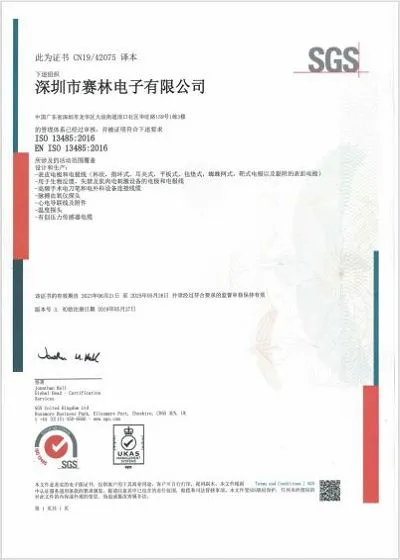

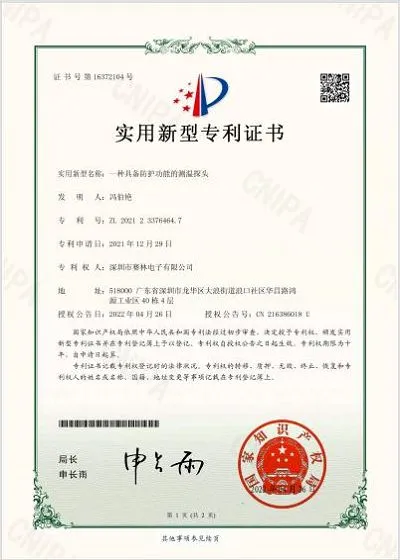

FAQ
Hot Tags: brain electrode touch dry for eeg, China brain electrode touch dry for eeg manufacturers, suppliers, factory, foot dry electrode advanced eeg brain electrode eeg module, brain electrode touch dry for eeg, eeg dry electrode