



What is the noise level of reusable cup electrodes?
In the field of electroencephalography (EEG) and other electrophysiological measurements, the noise level of electrodes is a critical factor that significantly impacts the quality of the acquired signals. As a supplier of reusable cup electrodes, understanding and communicating the noise characteristics of our products is essential for our customers, who rely on accurate and reliable data for their research, clinical diagnosis, and other applications.
Understanding Noise in Electrodes
Noise in electrodes can arise from various sources, including thermal noise, electrochemical noise, and interference from external electromagnetic fields. Thermal noise, also known as Johnson - Nyquist noise, is a fundamental type of noise that is present in all electrical conductors due to the random motion of electrons. It is proportional to the temperature, resistance, and the bandwidth of the measurement system. Electrochemical noise, on the other hand, is caused by the chemical reactions occurring at the electrode - electrolyte interface. These reactions can generate small fluctuations in the electrical potential, which can be detected as noise in the measured signal.
External electromagnetic interference can also contribute to the noise level of electrodes. This can come from power lines, electronic devices, and other sources in the environment. To minimize this type of noise, proper shielding and grounding techniques are often employed.
Noise Level of Reusable Cup Electrodes
Our reusable cup electrodes are designed to have a low noise level to ensure high - quality signal acquisition. The materials used in the construction of the electrodes play a crucial role in determining the noise characteristics. For example, our Reusable Pure Solid Silver EEG Electrode Cups For Kids are made of pure solid silver, which has excellent electrical conductivity and low electrochemical noise. Silver is also a biocompatible material, making it suitable for use in contact with the human body.
The design of the electrode cups also affects the noise level. The shape and size of the cups are optimized to ensure good contact with the skin and minimize the impedance between the electrode and the skin. A lower impedance helps to reduce the thermal noise and improve the signal - to - noise ratio. Our Reusable Cast Pure Silver 10mm EEG Cups Electrode is designed with a 10mm diameter, which provides a good balance between contact area and signal quality.
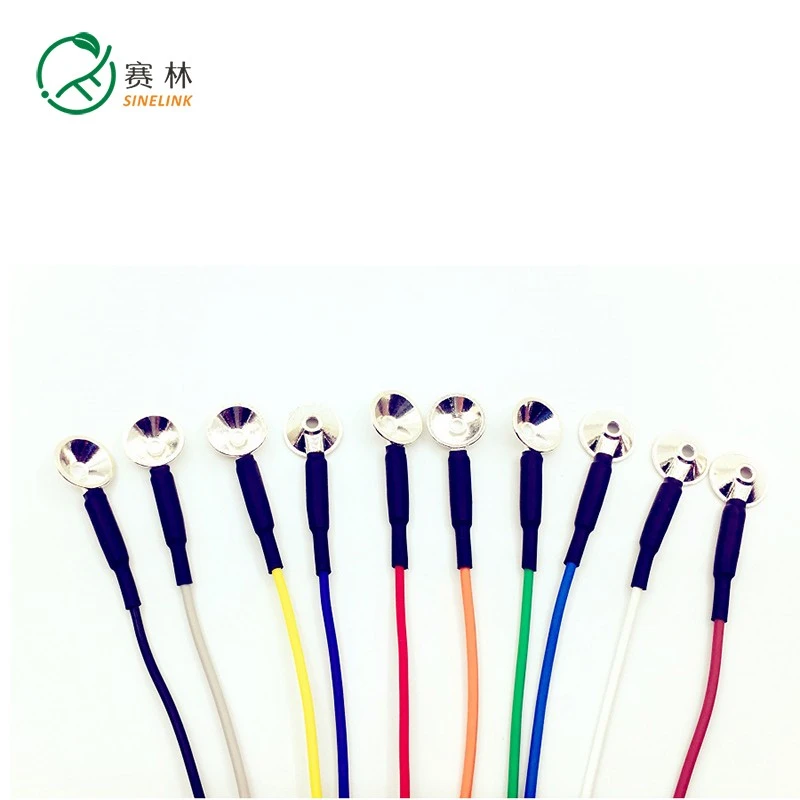

In addition to the material and design, the manufacturing process also has an impact on the noise level. We use high - precision manufacturing techniques to ensure the consistency and quality of our electrodes. This helps to minimize variations in the electrical properties of the electrodes, which can contribute to noise.
Measuring the Noise Level
To accurately measure the noise level of our reusable cup electrodes, we use specialized equipment and techniques. We typically measure the noise in a controlled environment to minimize the influence of external factors. The measurement is usually performed over a specific frequency range, which is relevant to the application. For example, in EEG measurements, the frequency range of interest is typically from 0.5 Hz to 100 Hz.
We also compare the noise level of our electrodes with industry standards and other products on the market. This allows us to ensure that our electrodes meet or exceed the requirements of our customers. Our quality control process includes regular testing of the noise level to ensure the consistency and reliability of our products.
Importance of Low Noise Level
A low noise level in reusable cup electrodes is crucial for several reasons. In research applications, accurate and reliable data is essential for drawing valid conclusions. High - noise levels can mask the true signals of interest, leading to incorrect interpretations. In clinical diagnosis, such as in EEG for epilepsy detection, a low noise level is necessary to accurately identify abnormal brain activity.
Moreover, a low noise level can also improve the efficiency of the measurement process. With less noise, less filtering is required, which can reduce the processing time and improve the overall performance of the measurement system.
Comparison with Disposable Electrodes
Disposable electrodes, such as our Disposable AgCl ABS EEG Deep Cup Electrode Wire, are also widely used in electrophysiological measurements. While disposable electrodes have the advantage of convenience and reduced risk of cross - contamination, reusable cup electrodes often offer a lower noise level. Reusable electrodes can be carefully cleaned and maintained, which helps to preserve their electrical properties and reduce noise over time.
However, the choice between reusable and disposable electrodes depends on the specific application and the requirements of the user. For some applications where cost - effectiveness and convenience are the main concerns, disposable electrodes may be the preferred choice. For applications where high - quality signal acquisition is crucial, reusable cup electrodes are often a better option.
Conclusion
As a supplier of reusable cup electrodes, we are committed to providing products with a low noise level to meet the needs of our customers. Our electrodes are designed and manufactured using high - quality materials and advanced techniques to ensure reliable and accurate signal acquisition. Whether you are a researcher, a clinician, or an engineer, our reusable cup electrodes can provide you with the high - quality data you need.
If you are interested in learning more about our reusable cup electrodes or have any questions regarding their noise level and performance, please feel free to contact us for a procurement discussion. We are ready to provide you with detailed information and support to help you make the right choice for your application.
References
- Nunez, P. L., & Srinivasan, R. (2006). Electric fields of the brain: The neurophysics of EEG. Oxford University Press.
- Luck, S. J. (2005). An introduction to the event - related potential technique. MIT Press.